Last updated on March 9th, 2026
This post may contain affiliate links. If you click through and make a purchase, I could earn a small commission at no extra cost to you. Thanks for your support!
Japan is a true bucket list destination, and visiting for the first time is just as exciting as it is overwhelming—these tips for traveling to Japan for the first time are the perfect starting point for preparing for your trip.
Before you start diving into all the best places to visit in Japan for first-timers, and start drafting your busy Tokyo itinerary, your Osaka visit, and all the things you want to see in Kyoto in 3 days, first things first, you need to know a few things about what it entails to visit Japan.
From the best airport to arrive at, how to use public transportation in Japan, social etiquette, how to have data, where to take cash out, among other really important things that will make your time in Japan so much more efficient.
After spending nine incredible months living in Japan with our circus job, this is my compilation of the best tips for people traveling to Japan for the first time.
And while there’s an endless amount of tips and tricks about Japan travel, I think this is a good place to start for beginners. So let’s get started.
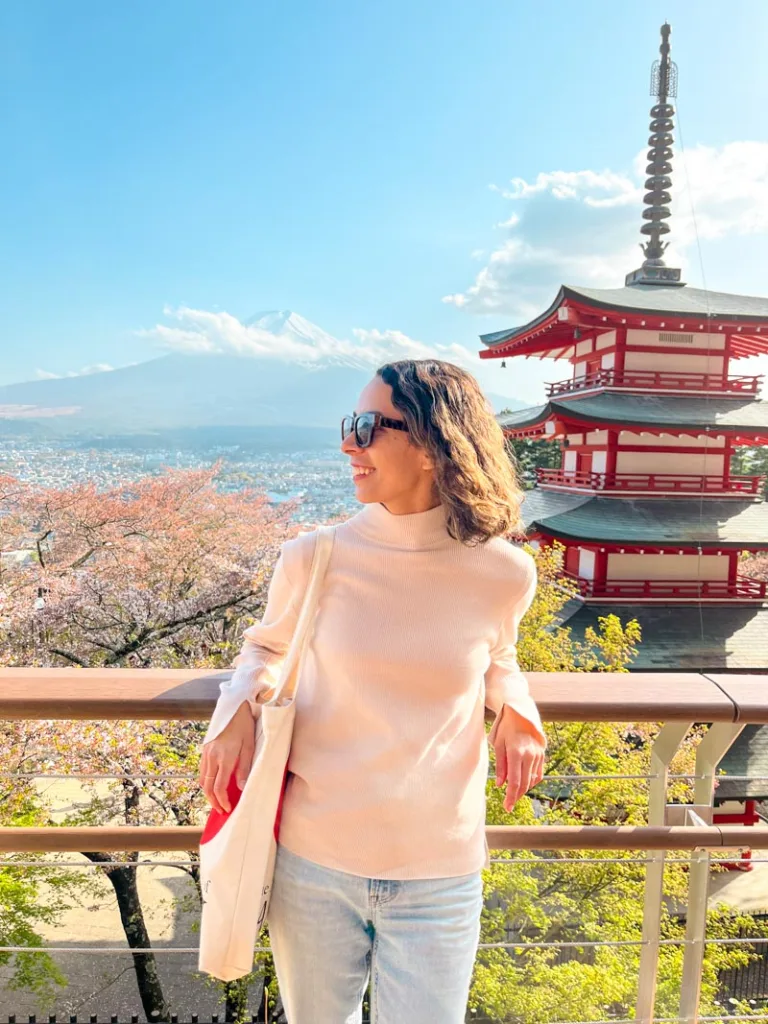
✨ Essential reads for first-time travelers to Japan:
Tips for Traveling to Japan for the First Time
Arrival & getting around travel tips for Japan
Fly into Haneda for an easier arrival
If you’re flying into Tokyo, you’ll want to find a flight to Haneda Airport, which is located closer to the city center, making for an easier and shorter commute into the city after a long flight.
Commuting from Haneda airport to, let’s say, somewhere around Shibuya will take you a little bit less than an hour (between 45 minutes- 1 hour), and you will need to take two metro lines.
The other option is Narita Airport, which I’d recommend avoiding as it’s further away from the city, and it will take up to an hour and a half to get to Shibuya from there.
If looking for the cheapest flight option into Japan, it might also be worth checking flights to Osaka, as I have found those to be cheaper at times. If you’re visiting the city anyway, you could also land and leave from there and move around with the Shinkansen.


Get a Suica or Pasmo card to ride subways with ease
An unmissable tip for traveling to Japan for the first time is to get a Suica or Pasmo card on arrival—these are just the names of different companies, but either of them works fine.
These cards work as a pre-paid rechargeable IC card which you can use to tap in and out of trains (except for Shinkansen and express ones), subways, and buses across Japan.
You can even use them as debit cards to pay for things at vending machines, convenience stores, and coin lockers.
It’s such an easy and convenient way to move around throughout your whole trip, instead of buying individual tickets each time you need to use transportation.
You can buy your card at stands in the arrivals area of the airport, or directly from the ticket vending machines.


Download Google Translate in Japanese for offline use
One of the best tips for traveling to Japan for the first time is to make sure to download the Japanese language on your Google Translate app, so you’re able to use it even without a connection.
The best way to navigate while in Japan when things don’t have an English translation is to open your Google Translate app, click on the camera icon on the bottom right of the screen, take a picture of what you need translation on, and watch the magic happen.
If you need to speak to someone, you can also use the voice feature to translate as you speak.
We are so spoiled nowadays with how easy it is to travel to a completely foreign country, if you think of it.

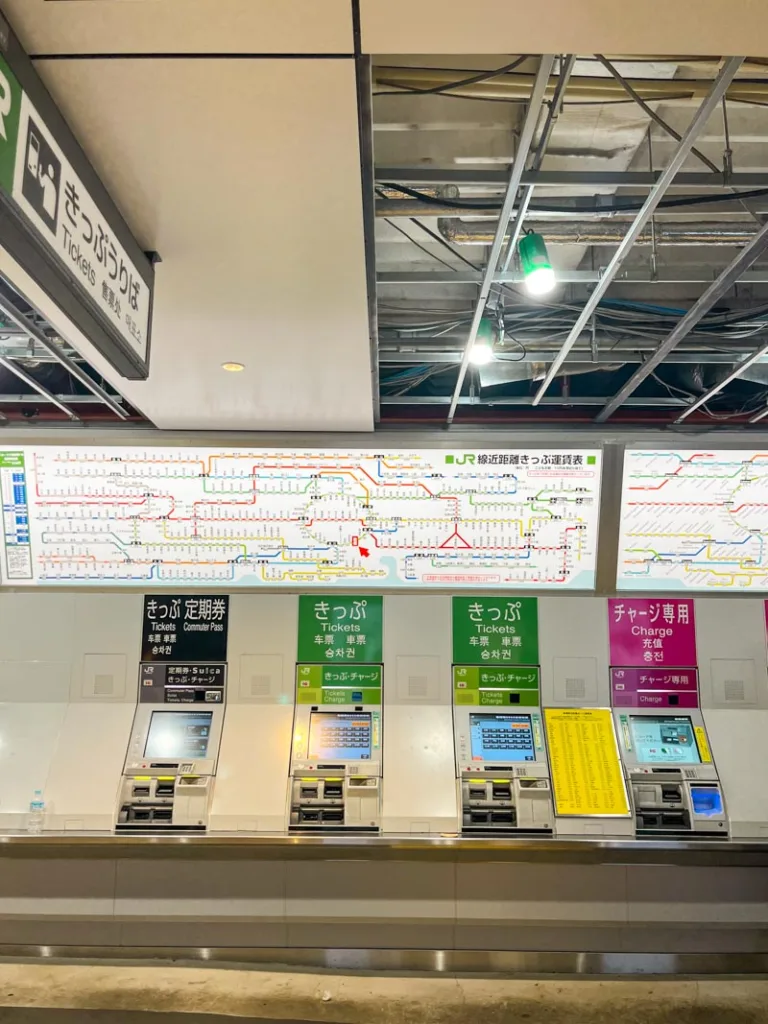
Book train seats at the platform machines
To be completely honest, even after living 9 months in Japan, some of the Japanese train systems are still a mystery to me. There are so many different types of lines.
To fully understand what I’m about to explain, check out this Japan train guide to see the different train lines.
I made a note to remember and share this during a very chaotic day trip from Osaka, so to help you avoid that, follow my tip: Book a train seat for the trains that allow it. You can do this at the ticket vending machines on the train platform.
It will make your trip so much more enjoyable knowing that no one else has booked your seat, and it’s on its way to kick you out.
I did this all the time when day-tripping from Osaka to Kyoto. When I was feeling fancy, I even booked the “Premium Car“, which is quiet and has cushy, comfortable seats.


Know when a JR Pass is worth it (only for 2+ Shinkansen trips)
The JR Pass (Japan Rail Pass) is a train pass for tourists that allows for unlimited travel using JR trains—this includes the Shinkansen bullet trains, limited express, and local JR lines.
While this is always a popular option for travelers trying to make the most of their stay in Japan, it’s worth analyzing if the pass is actually worth it for your specific itinerary.
With the JR Pass prices going up recently, it’s worth comparing the long-distance trips you want to make individually, and if it’s two or fewer trips, then maybe the JR Pass is not a good investment, and you might be better off just booking the trips individually.
If you are using mostly local trains, then the Pasmo or Suica card is more than enough.
JR Pass Prices for 2025:
| Days | Price |
|---|---|
| 7 Days | $355 USD |
| 14 Days | $568 |
| 21 Days | $710 |


Send your luggage ahead to your next destination
If you’re traveling with big luggage—which you should do so you can bring back aaaaall the fun purchases—then the best thing to do while traveling around Japan is to send your luggage “forward” to your next destination.
Forwarding your luggage allows for a much more relaxing experience while en route to your next city, as you don’t have to drag your luggage through busy train stations, and you don’t have to worry about reserving luggage space on trains—which you would have to do.
Many hotel receptions offer this service—you just need to fill out a form with the address of your next hotel, pay a fee, and the luggage will show up at your next accommodation the day after.
Magic!
If your hotel is not offering this service, you can use some companies like Yamato Transport (Kuroneko / Black Cat) that will ship the luggage for you.
This has to be one of my favorite tips for traveling in Japan for the first time, and I wish every country had this option. It would make traveling so much easier!
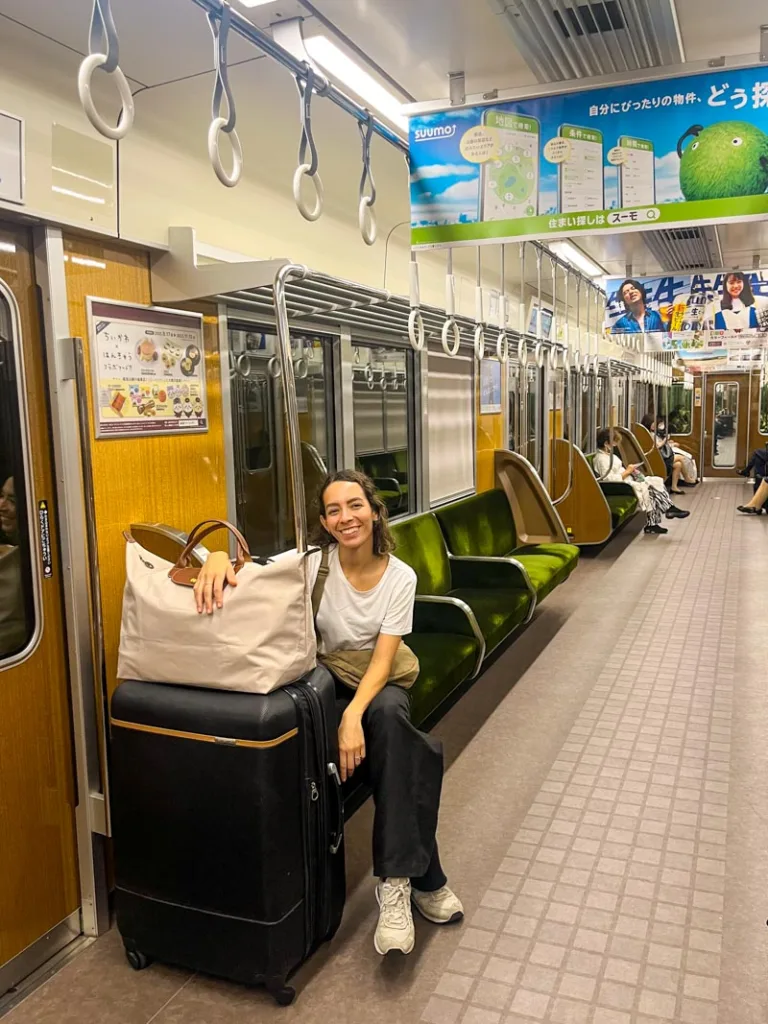

City etiquette & culture travel tips for Japan
Follow escalator etiquette
One thing that caught my attention early on was how organized everything is, even the foot traffic.
While one might think it’s common sense to always stand on the side of the escalator, for people rushing to be able to pass you, in Japan, it’s a cultural norm that gets taken very seriously.
It’s considered rude to stand in the middle of the escalator, or also, on the wrong side.
So to help you avoid getting some stares, always follow escalator etiquette in Japan, which can vary from city to city, stand left in Tokyo, and speed walk on the right side.
In Kyoto and Osaka, stand on the right, and speed walk on the left.
When in doubt, just see what the locals are doing and do the same.


Be quiet and respectful in public spaces
Again, Japan is a very respectful country, and one thing I’m obsessed with is how considerate they are as a culture.
It seems to be second nature to be aware of your surroundings and the people around you, and to always try to be respectful towards them, which is why silence is a golden rule.
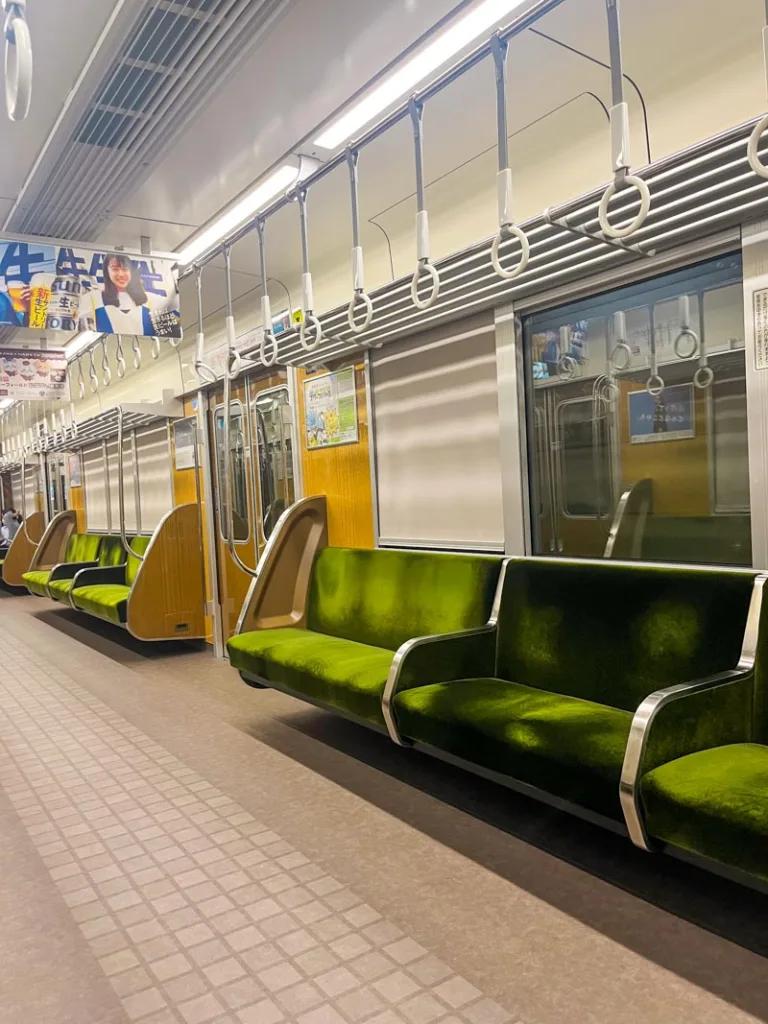
While you don’t have to go completely mute while in the metro or train, you should always keep your voice level down to not disturb other passengers.
There are signs everywhere about this: voice level down, absolutely no speakerphone, and no food or drinks are allowed on trains and the metro, unless it’s a long-distance train like the Shinkansen.

Keep Japan clean—carry reusable bags for trash
Japan wouldn’t be Japan without its impeccable streets, and how do they stay that clean?
There are no trash cans anywhere!
While it may seem like a weird approach to keeping a city clean, it seems to work.
But this means that whatever you buy and need to dispose of during the day, you have to keep with you until you get home, where you can throw it in the trash.
For this is good to carry a small reusable bag where you can pack away your trash inside your bag or backpack until you are back in your hotel.
I always carry some of these Baggu bags; the small ones are perfect for trash holding, and the big ones are great for souvenir shopping.


Try a local kissaten for a retro coffee experience
While there are so many unique things to experience in Japan, one of my favorite ones that I want every first-time traveler not to miss is visiting a Kissaten.
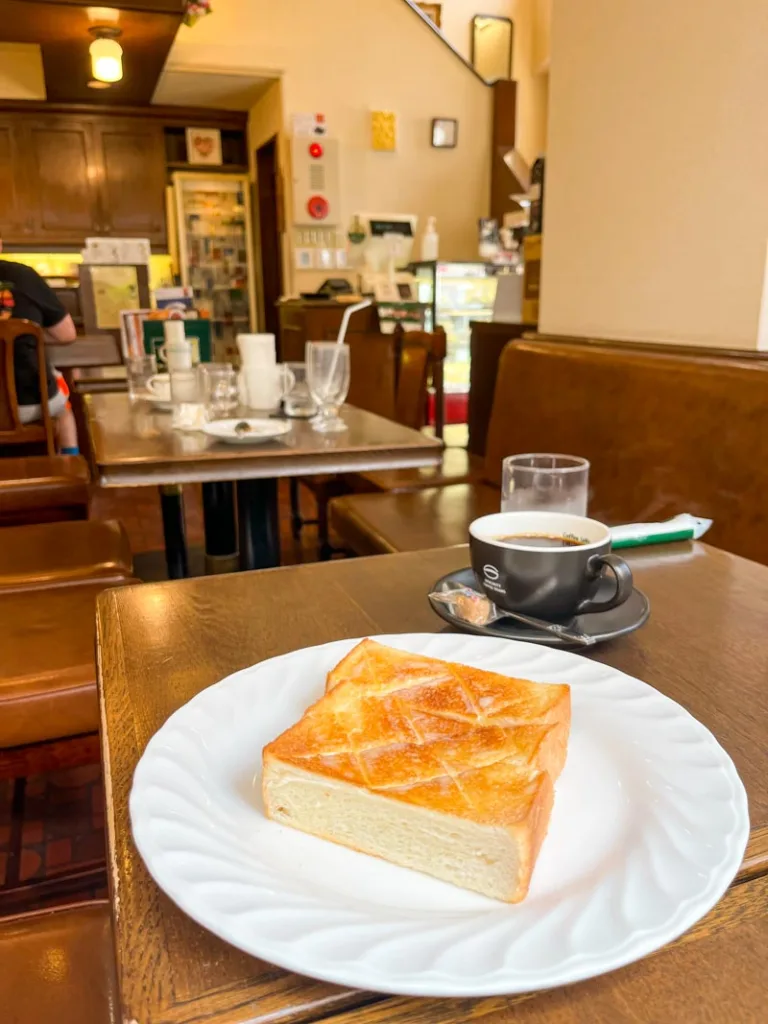
Kissaten are the old-school Japanese cafes with cozy and dark interiors, where locals gather to enjoy a strong cup of coffee with a cigarette (smoking indoors is still allowed in some), or enjoy a delicious breakfast combo.
If visiting a kissaten, make sure to try the thick, fluffy toast—it’s just incredible!

Everyday essential tips for traveling to Japan for the first time
Use a multi-currency bank like Wise for better currency exchange
One thing that’s always a bit of a headache when traveling abroad is how to deal with currency, where to take out cash, and trying to get a better exchange rate.
As a full-time traveler, I’ve been using Wise for many years now as my go-to, as it’s a super easy and convenient way to change between currencies, no matter what country we are in.
If possible, I would recommend opening a Wise account—or other multi-currency bank account—before your trip, to make sure you always get the best conversion rate from your local currency into Japanese Yen.
Then you can use the Wise card to pay directly with your Japanese Yen account, and take out cash during your trip, avoiding banks’ international fees.
It’s a win-win!
Always carry some cash
While payments with card are widely accepted across Japan, there are still many instances where cash will get you out of trouble. So consider always having a medium amount of cash on you.
You might need cash to pay at smaller, local restaurants, street food stands, temples and shrines, and even at some train ticket machines.
Sometimes you also need cash to load up your Pasmo card.
So when in doubt, just make sure to have around ¥10,000–¥20,000 (about $70–$140) in cash for daily use, which should last you a couple of days if you only use it for smaller expenses.
You can easily take out cash at most ATMs inside convenience stores. I normally stopped by any Lawson or 7-Eleven for this.


Keep in mind that things open late
One thing that really took me by surprise in Japan is how late many businesses open, with even coffee shops sometimes not opening their doors until 10 or 11 am.
So keep this in mind when planning your itinerary, and make sure to always double-check opening times for restaurants and attractions before committing to a plan.
A way to still make the most of your day, if you want to get a head start, is to use those “earlier” morning hours to simply wander around and explore an area before everything opens.
I love that it kind of forces you to take a “slow travel” approach—my favorite kind!


7-Eleven in Japan is next level
Whatever, whenever, 7-Eleven has your back!
Woke up early for an adventure, realized every single business is still closed, and you need food and coffee? Simply find the 7-Eleven closest to you.
7-Eleven is one of the best and most affordable places to eat in Japan, offering everything from tasty egg sandwiches and fluffy pancakes to sushi rolls, ramen, and even tonkatsu sandwiches—7-Eleven has it all!
Here you can also find miscellaneous items you might need during your trip, such as toiletries, emergency clothing items—like socks and tights—and even handy umbrellas, in case the weather is not on your side.
And as if the affordability and variety weren’t enough, most 7-Eleven’s in Japan are also open 24 hours!


Use an eSIM for easy connectivity
Nowadays, it’s nearly impossible to be disconnected, especially when traveling.
It’s useful to be able to always check Google Maps routes, train tables, and, if you’re anything like me, look at the food photos on Google Maps before choosing where to eat.
As a full-time traveler, I haven’t had a physical SIM card or phone plan in years. All I’ve been using for the last couple of years (probably around 5) has been Airalo.
Airalo is an e-SIM store that allows you to instantly download a digital SIM card to your phone, with options available for so many different countries.
Since it all works from one app, this is my go-to whenever we hop from one country to the next.
I’ve used this in South Korea, Japan, France, Belgium, the Netherlands, Mexico, and many other countries and never had any problems with it—the only place the connection didn’t seem to be great was Indonesia.
So if your phone is compatible with e-SIM cards, I would highly recommend downloading an Airalo e-SIM for ease of mind—and it will definitely be way cheaper than paying for roaming.
Final thoughts on tips for traveling to Japan for the first time
Visiting Japan for the first time, it’s such an exciting and almost equally overwhelming adventure!
There’s so much to plan for, so much information to absorb, and so much to learn before even getting there, to guarantee you can make the most of your precious time in magical Japan.
After living there for nine months and having so many “uh?” moments, I hope this guide with tips for traveling to Japan for the first time saves you some of those confusing moments I found myself in.
While there are infinite little tips and tricks that could be said about traveling to Japan, I think this is a good starting point.
But let me know in the comments if you have any questions, or if there are any beginner-friendly tips I should add.
Was any of these tips particularly interesting to you or completely new? Let us know in the comments!